The Shared Studio Playbook: How Veteran Performers Are Splitting Overhead Without Splitting Apart
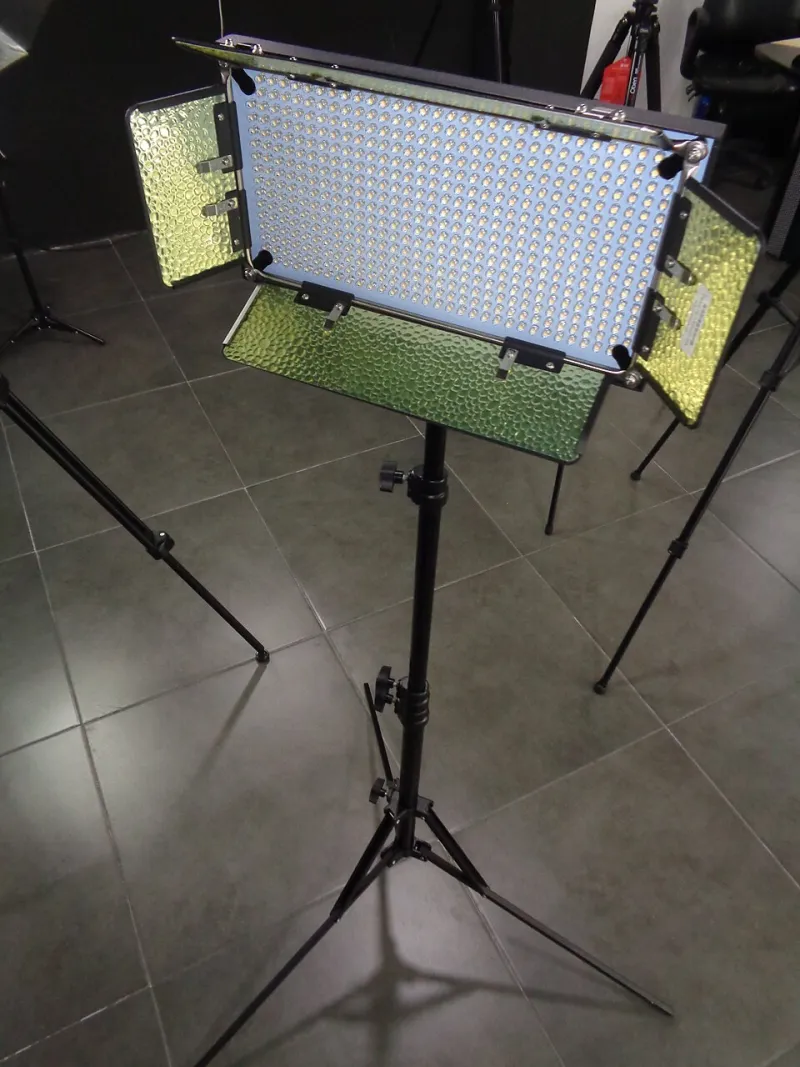
Photo: David Adam Kess, CC BY-SA 4.0, via Wikimedia Commons
A commercial space with decent light, a locking door, and enough room to back a camera up fifteen feet runs $1,200 to $2,800 a month in most mid-size US markets, before utilities, insurance, and the endless small stuff. For a solo performer shooting two or three days a week, that math is brutal. You are paying for a month of rent to use a room for maybe forty hours.
So performers started doing what people do when a fixed cost gets stupid: they divided it. Shared studios, co-owned lighting and camera kits, and rotating booking calendars are now a recognizable model in a dozen US cities, and in 2026 they are the single most common way experienced performers get out of the spare bedroom without signing a lease that eats them alive.
Why the solo studio stopped penciling out
Three things changed. Production standards went up, so a bare wall and a webcam no longer cut it for premium pricing. Payouts got more predictable, which made performers willing to commit to ongoing expenses. And the platforms made it clear that professional-looking sets and consistent audio are what separate a $12 subscription from a $4 one.
Meanwhile, nobody wants to be the person who bought a $1,800 camera package and uses it eleven times a year. That is the gap the co-op fills.
What a co-op actually looks like
There is no single template, but most functioning groups land somewhere between four and eight members. Structure usually goes one of two ways.
The LLC with member buy-ins. The group forms a limited liability company, each member buys in for $500 to $1,500, and monthly dues of $150 to $400 cover rent, utilities, insurance, and a small maintenance fund. The LLC holds the lease. Decision-making is by majority vote on big items and by the member who owns the week on small ones.
The anchor tenant with sublicenses. One performer holds the lease and sublicenses studio time to three or four trusted colleagues at a flat monthly rate. Simpler paperwork, more risk concentrated on the anchor, and it works best when the anchor and the sublicensees have worked together before.
Both versions work. The LLC version is more durable and more annoying to set up. The anchor version is faster and depends entirely on the anchor being someone everyone trusts with the light bill.
The agreement you write before you buy the first light
Nothing kills a co-op faster than a handshake and a group chat. A two-page operating agreement, drafted or at least reviewed by a local attorney, should cover:
- Buy-in and monthly dues, plus exactly what happens when someone misses a payment twice
- The booking calendar, who owns which days, how swaps work, and a minimum notice window
- Gear ownership and depreciation, spelled out per item, so nobody argues about the camera that got dropped
- Content ownership, confirming that footage shot in the space belongs to the performer who shot it and not to the LLC
- Guest policy, including whether scene partners count as guests and what vetting they need
- Cleaning and reset standards, because this is the number one source of low-grade resentment
- Exit terms, including buyout price, notice period, and how a departing member's share of gear gets valued
- Dissolution, meaning what happens to the lease and the kit if the group falls apart in month seven
- Dispute resolution, usually a mediator first and a named attorney second
Boring? Completely. But the groups that survive are, almost without exception, the ones that wrote it down.
Gear, calendars, and the unglamorous logistics
The gear kit is the easiest thing to get right and the easiest thing to get wrong. Best practice is to buy the shared kit out of the LLC budget rather than having members contribute personal equipment, because personal equipment creates personal claims. A reasonable starter kit for four members: two camera bodies with a couple of lenses, three LED panels with stands, a couple of lav mics and one good on-camera shotgun, a set of colored backdrop rolls, and a decent tripod. Call it $3,000 to $5,000 split four ways.
Scheduling works best on a shared digital calendar with fixed weekly blocks rather than a first-come system. Predictability is the whole point. If everyone knows that Tuesday and Thursday are Kim's, they stop negotiating every week.
Referrals and safety are the quiet benefits
The financial case is obvious. The second-order benefits are the reason people stay.
Shared space produces shared referrals. When a member gets a booking request that is not her niche, she hands it to someone in the group, and that comes back around. Co-ops also tend to develop informal scene-partner pools, which cuts down on the exhausting work of vetting strangers for every shoot.
Safety matters too, and it is not a small thing. Working alone in a rented room with a client you have never met is a genuinely risky situation, and it is the default for a lot of independent performers. A co-op means there is usually someone else in the building, a check-in text that goes out before a shoot and gets answered after, and a shared list of people who have behaved badly. That is worth several hundred dollars a month on its own.
Is it for you?
This model works for performers who have steady enough output to justify the monthly cost, who can tolerate a group decision now and then, and who are willing to sign something. It does not work for people who shoot four days a year, or for people who need total control of a space at all hours.
If you are curious, start small. Find two colleagues, rent a shared space for one weekend a month, and see how the logistics feel before anyone signs a lease. Most successful co-ops started as an experiment between people who already trusted each other.